Structural Integration
for Performing Artist
Performing asks a lot of the body. Whether you’re a dancer, musician, singer, actor, or other movement-based artist, your body is your instrument—and over time, the demands of training and performance can leave an imprint.
As a performing artist myself, I know how often our body has taken a back seat in service of your art. If you are looking to work with someone who understands the importance of the training and rigor you require, then you’ve come to the right place.

Why Structural Integration?
Rehearsing the same movement thousands of times, holding a particular posture for hours, repeatedly reaching for your physical limits, or compensating for an old injury can gradually create patterns of tension and restriction. You may notice it as a shoulder that doesn’t quite move freely, a hip that feels stuck, a persistent ache in your back, or simply the sense that one side of your body isn’t working quite like the other.
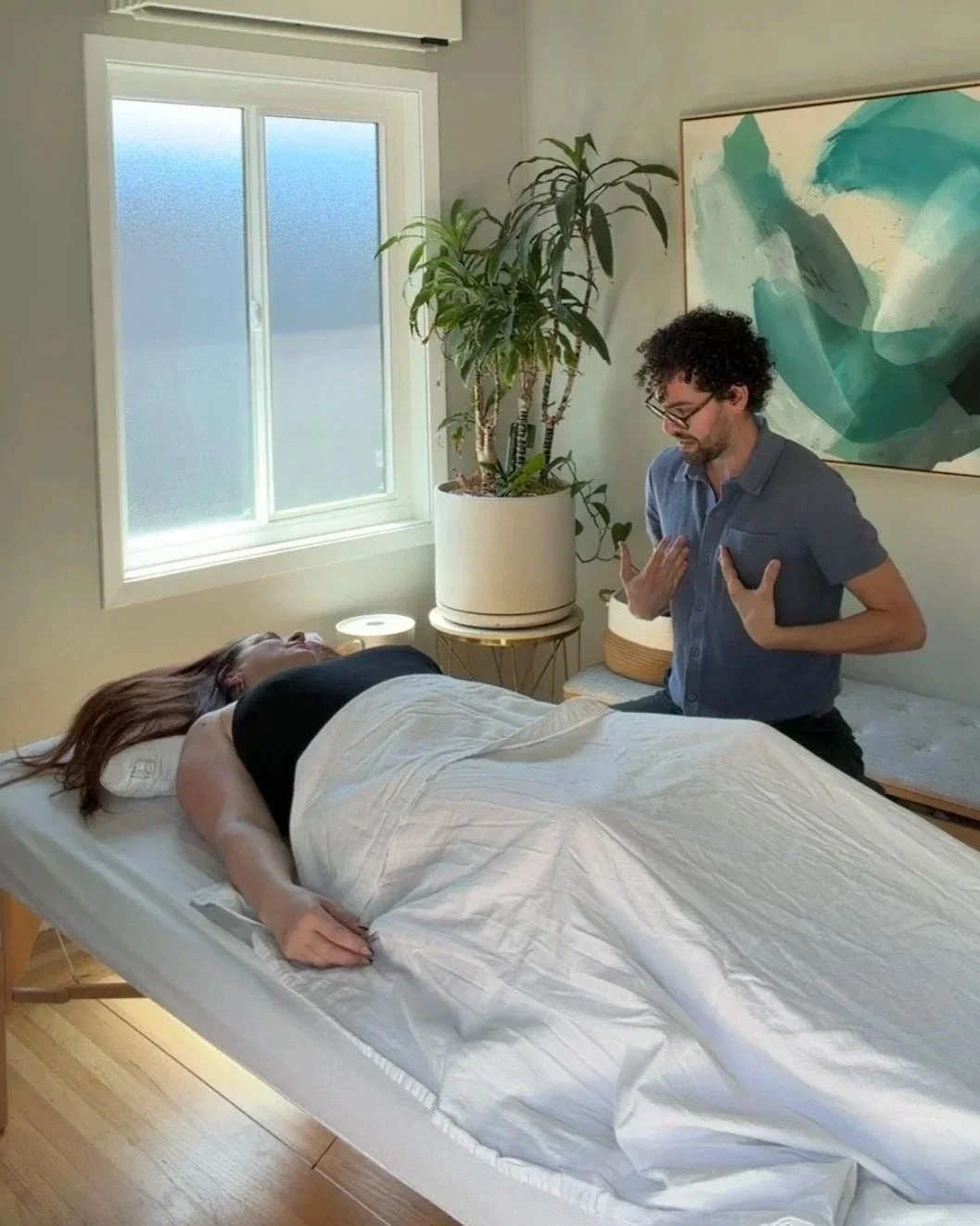
As a Structural Integration practitioner, I work with the body’s fascia, the connective tissue network that surrounds and connects every muscle, bone, and structure in the body. Fascia is highly responsive to the demands we place on ourselves, and our habitual patterns of movement can become reflected in this tissue over time. For performers, this can mean that the body begins to rely on familiar pathways—even when those pathways are no longer the most efficient, comfortable, or expressive way to move.
Rather than simply addressing where something hurts, Structural Integration looks at the larger patterns that may be contributing to how you move. The goal is to create more options: more ease, more mobility, greater balance and coordination, and a greater sense of connection throughout the body.
For an artist, that can mean more than simply being out of pain. It can mean having more of yourself available for your art.
What I Treat
I could give you a list of medical diagnoses, but that often doesn’t capture why performing artists actually come through my door.
Maybe a movement that used to feel effortless now takes more work. One side of your body feels different from the other. You’re carrying tension that makes it difficult to fully relax between rehearsals or performances. Or perhaps you’ve recovered from an injury and been “cleared,” but your body still doesn’t feel quite like itself.
Sometimes there’s pain—a persistent ache in the neck, back, shoulder, hip, or knee. Other times, it’s something harder to describe: a loss of ease, range, coordination, or confidence in a movement you know your body can do.
To put it simply: I work with the experience of moving in your body.
My focus is on creating small changes in how the body organizes itself that can have a significant impact on how movement feels and how freely you can express yourself through it. Together, we explore the larger patterns that shape how you move, and shift them to create more ease, adaptability, and options in your movement—so you can spend less energy managing your body and more energy expressing yourself through it.
You don’t have to be injured to come in. Sometimes you simply know something feels different, and you want to understand why.
Ready to hear about how I can help you bring ease into your life?
Artists in Action
While every artist’s journey is unique here are some examples of how I’ve helped different performers overcome chronic pain problems, heal from old injuries, and increase mobility and ease of movement
Touring musician unwinds her chronic pain issues.
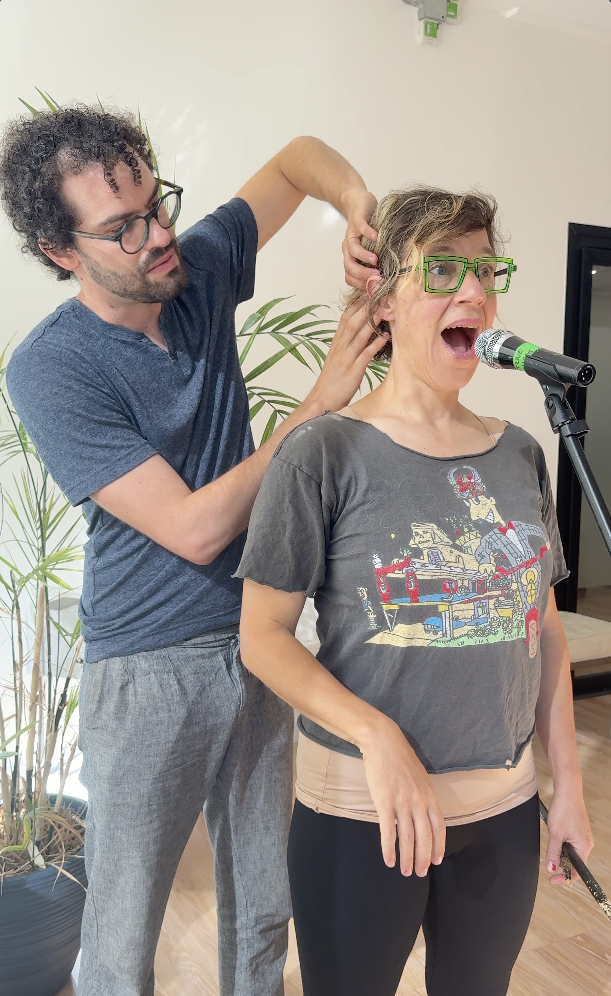
Merrill Garbus, Singer/Songwriter of the duo Tune-Yards, came to me with chronic right leg and hip pain that showed up on stage, but also crept into her daily life after over 15 years as a touring artist.
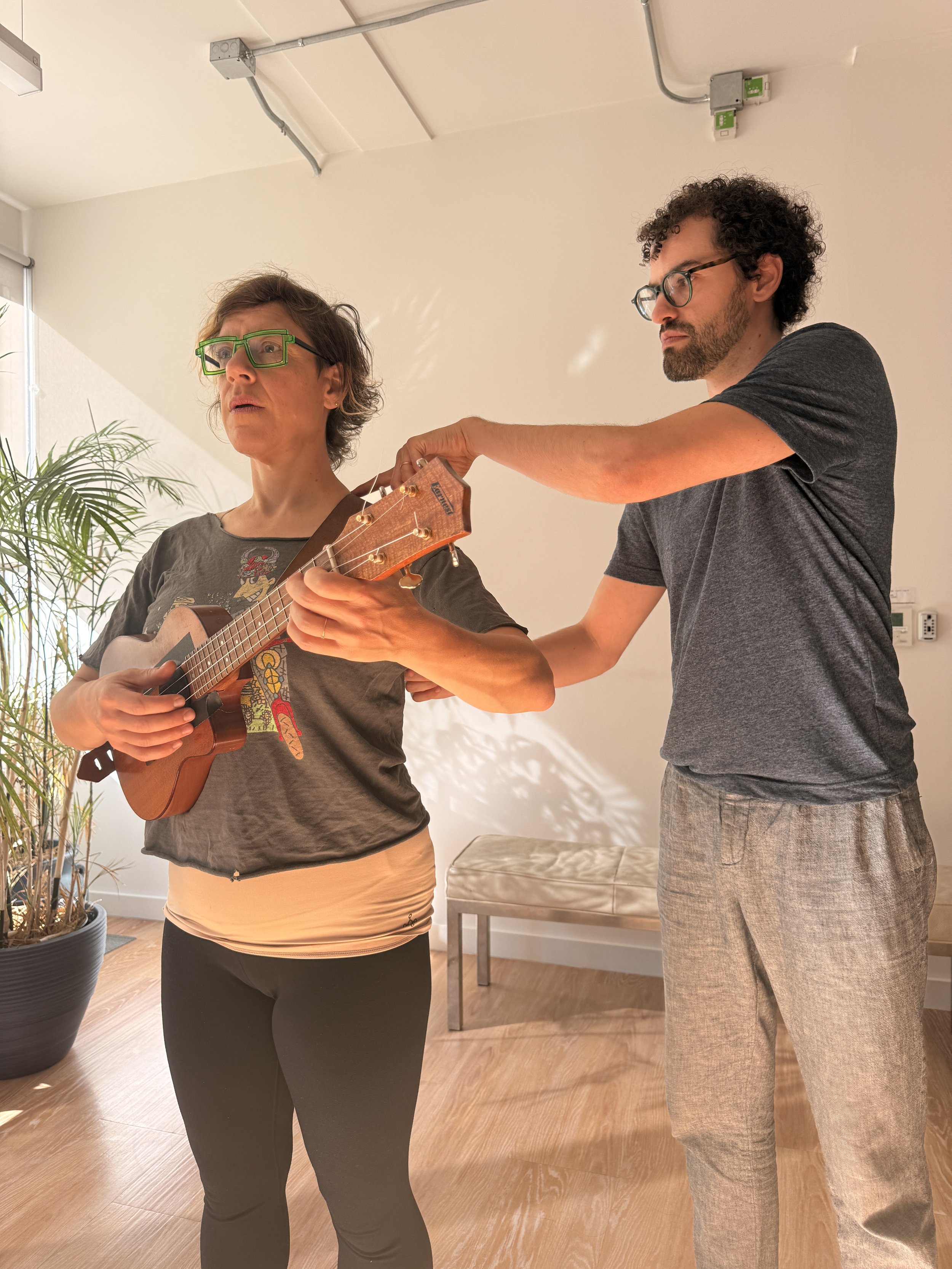
In our sessions we uncovered a rotational pattern that was linked to several pain points, not only in her hip and leg but in her jaw and shoulders as well. And this pattern was being reinforced by the way she held her ukulele.
Once we were able to unwind her fascial rotational pattern, we then workshopped techniques to adjust how to hold the guitar, jaw placement in singing, and bringing more movement and support through the lower half of the body to support the active diaphragm and arms.
“My work with Derek has been nothing short of transformational. From the hands-on work with the fascia -- which visibly changed my facial structure and foot placement -- to completely rethinking my lung capacity after Derek "said hello" to space in the upper parts of my lungs, I truly have a changed experience of my own body. It was challenging, collaborative work, and I can't recommend Derek enough.”
-Merril Garbus, Tune-Yards
You can here more about Merrill’s experience through the 10 series in her substack article here.
Clearing up past injuries for a full time teacher and performer.
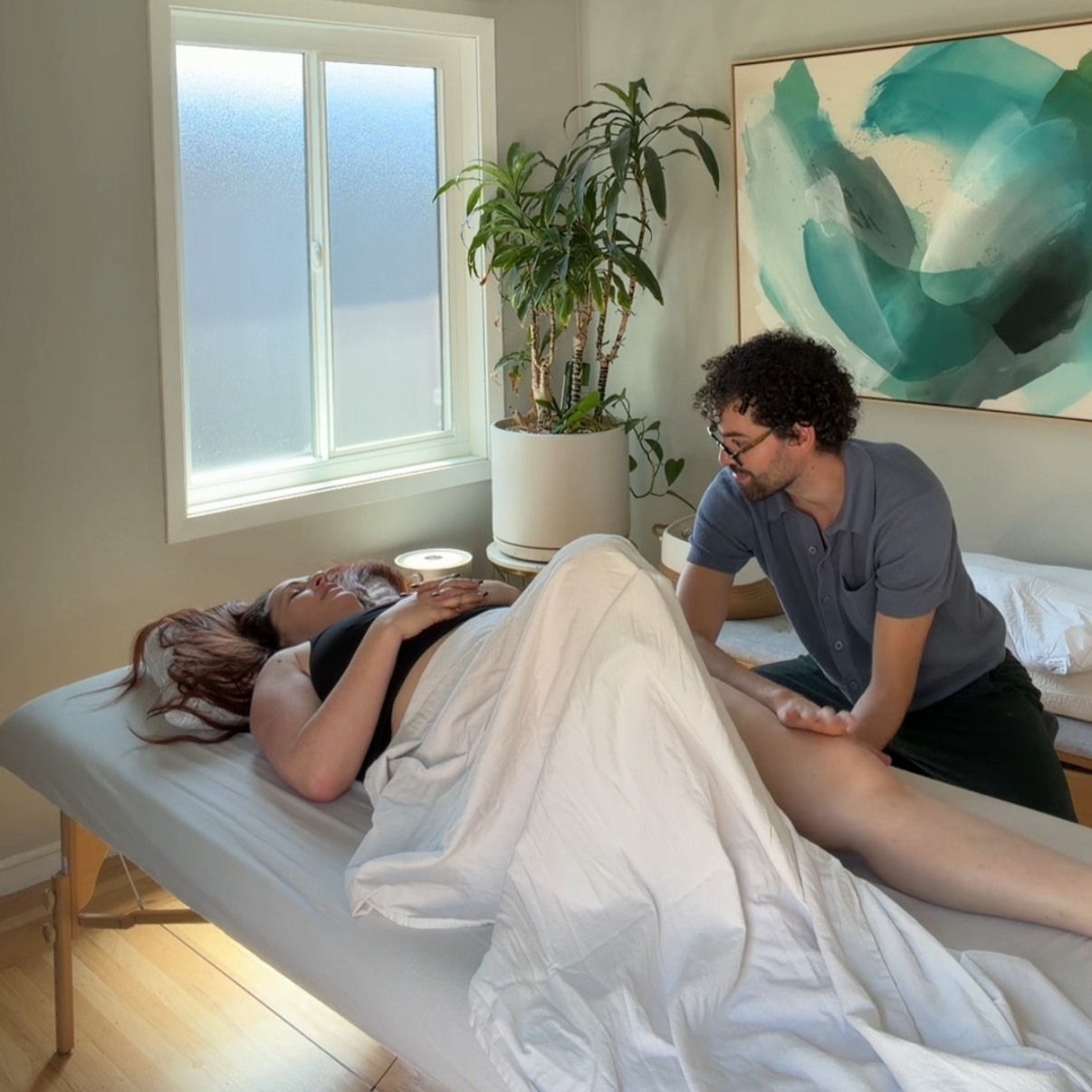
When Kirsten first came to me, she was suffering from the overwhelm with many diagnoses and no clear solution. She’d been having acute pain in her low back and hip, and had gotten a host of imaging and theorizing from doctors: hip impingement, potential labral tear, bulging lumbar discs, fibroid related pain. But each diagnosis brought more questions and less relief. As someone who teaches and performs regularly, putting her physical activity on pause to figure it out was not an option.
We started by quieting the nervous system, so that the communication between feet, hips, and ribcage started to improve. Her lower back pain slowly became more manageable, and she was able to get a deeper understanding of the things that triggered her hip pain, and adjust while still managing a full teaching and performance schedule.
She reported feeling less overwhelmed by her body, and having more options to move through complications with clarity. Her regular chiropractor noticed the difference too, stating that after my sessions his adjustments became easier and more effective.
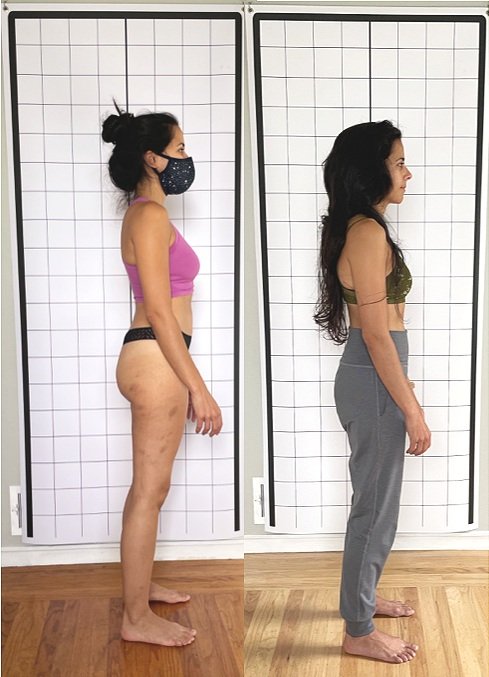
An Aerialist’s return to freedom and mobility
I started working with Nina shortly after COVID lockdown. As a seasoned aerialist who was accustomed to performing multiple gigs a week, the return to performing after the pandemic left her feeling stiffer and crunchier. She could still hit all the tricks she used to, but they took much more conditioning and warming up to do safely, and small slip ups left her feeling aching for days after a show.
We first started working to free tension from the ribcage and sternum so that her shoulder extension wasn’t limited by her ribcage. Not only did this help stabilize her overhead grips, but helped take the tension out of her neck and shoulders, and distribute through the back.
As we worked deeper into psoas and spinal work, her back bends and leg extensions began to flow without pain or effort–even her training partner noticed and started asking what she was doing differently. The chronic pain patterns that showed up when she felt she pushed herself too hard took a back seat as she was able to dive into her practice with more ease.
“Since working with Derek, I've noticed a significant reduction in hip and neck pain. Along with a reduction in chronic pain, I've had significant increases to my hamstring flexibility and upper back mobility.”
-Nina Sawant, photographed above before and after 10 sessions